


A strong aspect of the latest adaptation of Stephen King’s iconic novel, Salem’s Lot, is the beautiful visuals it captures from its small-town environment. By filming many scenes at sunrise and sunset, director Gary Dauberman captures some fantastic images that pair nicely with its 70s aesthetic.
While speaking at a recent junket for Salem’s Lot, actor Spencer Treat Clark dove into the production design and aesthetic of the film and the beauty of their shoot in New England.
The Aesthetic And Setting Of ‘Salem’s Lot’
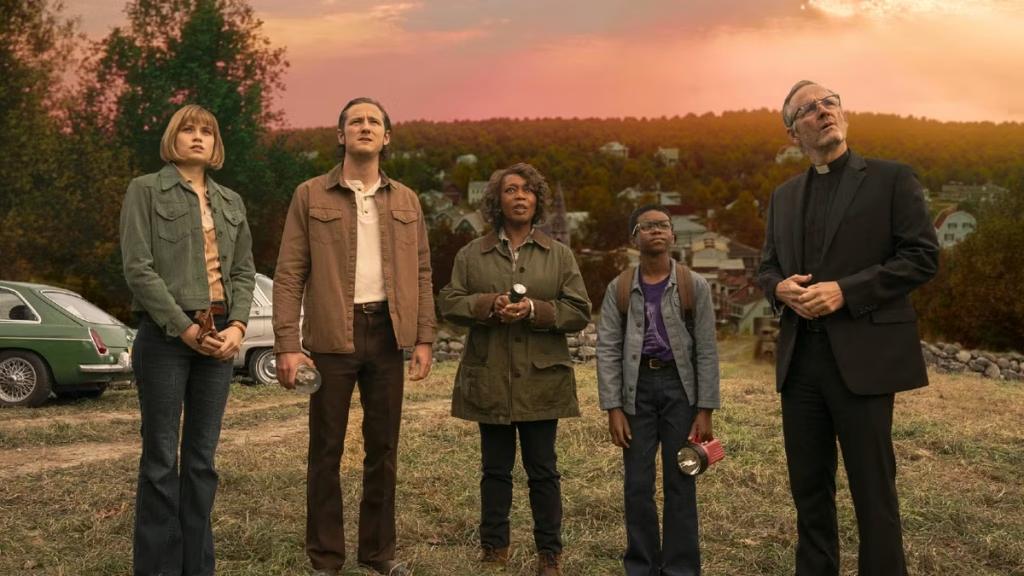
When asked directly by a journalist in attendance, Spencer Treat Clark said:
I was really fortunate that they set the movie in the ‘70s. It feels like a period piece now, but when Stephen King wrote it, it was contemporary. I was glad they kept the ‘70s aesthetic. The [film’s] setting made a difference. For example, when we were shooting in early September, everything was still green, but by the end of the movie and the shoot, paralleling the town’s decay, the leaves had fallen, and the trees were bare. That kind of change impacts you as an actor, and I think it affects the audience, too.
Spencer Treat Clark
The area itself had this spooky atmosphere. We filmed near Salem in New England—it’s old, colonial, and full of history. I’m from Connecticut, so I’m familiar with New England, but the part of Massachusetts where we filmed, had a small-town vibe. There were only a couple of little restaurants, and it made [the cast] all hang out together. It gave us that close-knit village feel—not just with the actors but with the crew as well. All of that absolutely enhanced the experience and made it more fun.
The 70s aesthetic of Salem’s Lot, Carrie and other Stephen King novels during that time was massively influential to the horror genre across both books and film. From Mike Flanagan to The Duffer Brothers, many filmmakers within horror have built their visions on the foundation of what Stephen King created. Salem’s Lot may have been released in 1975, but even as the book approaches the age of 50 with now three film adaptations under its belt, its legacy and impact still continue to be felt and realised to this day.
